📋 What Are Product Specifications?
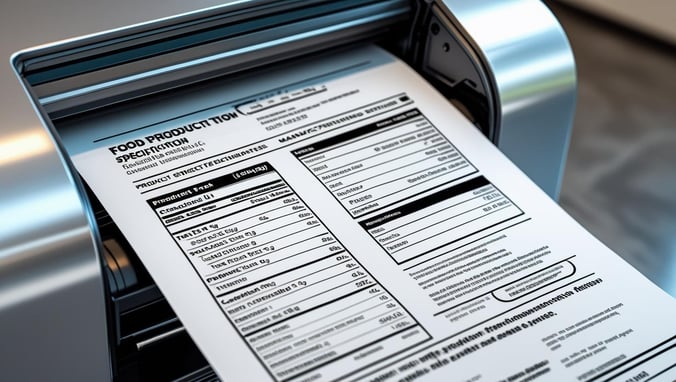
Product specifications (or "specs") are detailed documents that define the attributes, standards, and requirements of a food product. They serve as a contract between departments—R&D, procurement, manufacturing, quality assurance, and even marketing.
🧪 Key Components of a Food Product Specification
Here’s what a robust spec typically includes:
1. Product Description
- Name, category, and intended use
- Target consumer or market segment
- Sensory profile (taste, texture, appearance)
2. Ingredient List
- Full breakdown with quantities
- Source and quality grade of each ingredient
- Allergen declarations and additive codes
3. Nutritional Information
- Per 100g and per serving
- Energy, macronutrients, vitamins, minerals
- Compliance with local labelling laws (e.g., UK FIC or EU 1169/2011)
4. Processing Instructions
- Manufacturing steps and critical control points
- Time-temperature parameters
- Equipment requirements and hygiene protocols
5. Packaging Details
- Type, size, and material of packaging
- Labelling requirements (including batch codes and expiry dates)
- Shelf-life and storage conditions
6. Quality and Safety Standards
- Microbiological criteria
- Physical and chemical tolerances
- HACCP alignment and traceability measures
7. Regulatory Compliance
- Country-specific food laws
- Certifications (e.g., BRCGS, ISO 22000, Organic, Halal)
- Claims (e.g., gluten-free, vegan, low-fat)
🚨 Why It Matters
Poorly written specs can lead to:
- Product recalls due to allergen mislabeling
- Regulatory fines or import/export issues
- Damaged brand reputation
In contrast, strong specs empower teams to deliver safe, delicious, and compliant products every time, and let your consumers know about it.
🧩 Spec Management goes Digital
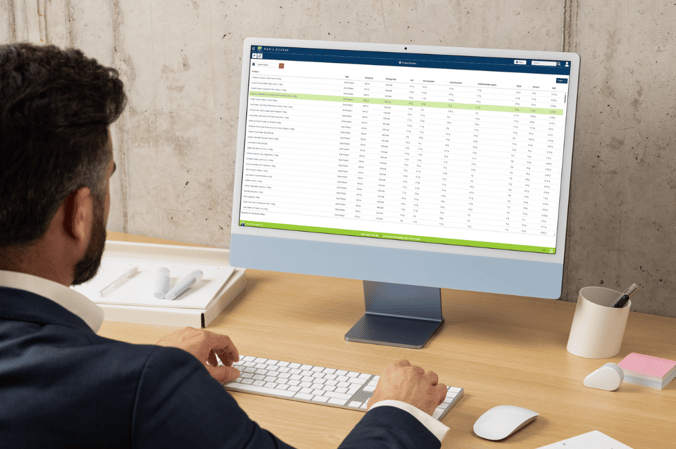
Food manufacturers are increasingly adopting digital specification management to simplify how they create and maintain product specifications. So when Caroline's Dairy approached us to see what we could do to move their Product Specs into this digital revolution, we realised since NotaZone already holds your essential product labelling details—such as ingredients, allergens, and nutrition—its a logical choice to generate your product specifications directly from the same data set.
🚀 Key Transformations
1. One Template - Many Documents
- Making even a minor adjustment to the layout of a Product Specification can be a laborious task for Technical Departments, as every document must be individually updated to reflect the change. Traditional methods require painstaking manual edits to each specification.
- By contrast, using a central Template for your Product Specifications means all your documents automatically adopt the same format and layout—so when you update the Template, every specification is instantly available in the new style.
2. Centralised Data Depository
- Whenever you update product information within NotaZone, those changes are reflected across all relevant applications—so if nutritional values or ingredient lists are amended, the updates automatically carry through to both Spec Sheets and product labels.
- This dramatically shortens the time needed to launch new products or make adjustments to existing ones. Plus, NotaZone provides clear overviews that let you review and compare details across your entire product range, with export options available for offline analysis.
3. Customisable Fields
- Our research into Spec Sheet creation for this project highlighted that no two companies approach this in exactly the same way; some require details like organoleptic characteristics (taste, texture, etc.), while others do not.
- So at our clients request, our latest ‘Specifications’ release enables NotaZone users to tailor their own spec sheet fields to match their specific needs, ensuring the right information is always included. (Adding a custom spec sheet field instantly makes it available across all products, so this detail can be quickly populated whenever necessary).
4. Audit-Ready all the time
- It’s common for producers to rush to update documentation ahead of an audit in order to avoid the dreaded non-conformance. By keeping all your information in a single database, NotaZone ensures your documents are always up to date, consistent and accessible at the touch of a button, leaving you stress free and confident when audit time arrives.

📈 The Bottom Line
Moving to Digital spec management withing NotaZone isn’t just a tech upgrade—it’s a strategic asset, empowering businesses like Caroline's Dairy to keep the best possible documentation, without the time consuming maintenance of updating individual documents, and the peace of mind consistent and easily accessible record keeping brings.